Your Data Pipelines Are Running. But Are They Running Efficiently?
5 min
read
l
Nandini Sharma
l
October 29, 2026



Let’s craft intelligent solutions together—turning your data into unstoppable growth.


Modern cloud data platforms have made it easier than ever to ingest, transform, and analyze massive volumes of data. Yet as organizations scale their data operations, an important question often goes unanswered: How much of the computing power consumed by your data pipelines is actually delivering business value?
A pipeline can execute successfully, meet its schedule, and deliver accurate reports while still consuming significantly more resources than necessary.
Consider an enterprise processing 50 million transaction records every night, even though only 100,000 records have changed since the previous run. The pipeline may be functioning exactly as designed, but that does not necessarily mean itis operating efficiently.
A cross platforms such as Snowflake, Databricks, and Microsoft Fabric, these inefficiencies can translate into avoidable cloud expenditure, longer processing windows, delayed analytics, and increasing operational complexity.
The challenge is no longer simply getting data pipelines to work. It is ensuring that every unit of compute contributes meaningful value.
Cloud data platforms offer elastic computing resources, but elasticity alone does not guarantee efficiency. As data environments grow, several architectural and operational practices can contribute to unnecessary processing.
Many traditional ETL and ELT pipelines rely on full-refresh operations, rebuildingentire datasets even when only a small percentage of records have changed.While full refreshes remain appropriate for certain workloads, applying themindiscriminately can increase compute consumption and processing time ashistorical data volumes expand.
Not every dataset needs to be refreshed every few minutes. An operational sales dashboard may require frequent updates, while a monthly profitability model might only need recalculation when relevant financial data changes. Uniform refresh schedules can lead to unnecessary executions without delivering additional business value.
Poorly optimized joins, unnecessary data scans, repeated aggregations, and inefficient transformation logic can increase resource consumption even when pipelines process only incremental data. The cost of a workload depends on how efficiently processing is executed, not just on data volume.
A change in an upstream dataset can trigger multiple downstream jobs, even when the change does not affect every output. Without effective dependency management, organizations may repeatedly rebuild dashboards, reporting tables, and analytical models that could have remained unchanged.
Larger compute clusters or warehouses do not automatically produce better economics. Oversized resources and compute environments that remain active longer than required can generate avoidable costs.
The underlying issue is often a combination of inefficient processing logic, orchestration decisions, and resource configuration rather than any single technology limitation.
The transition from traditional batch-oriented architectures to modern cloud data platforms has introduced more flexible approaches. Organizations can design workloads around data changes,dependencies, freshness requirements, and processing costs rather than rebuilding everything on each run.
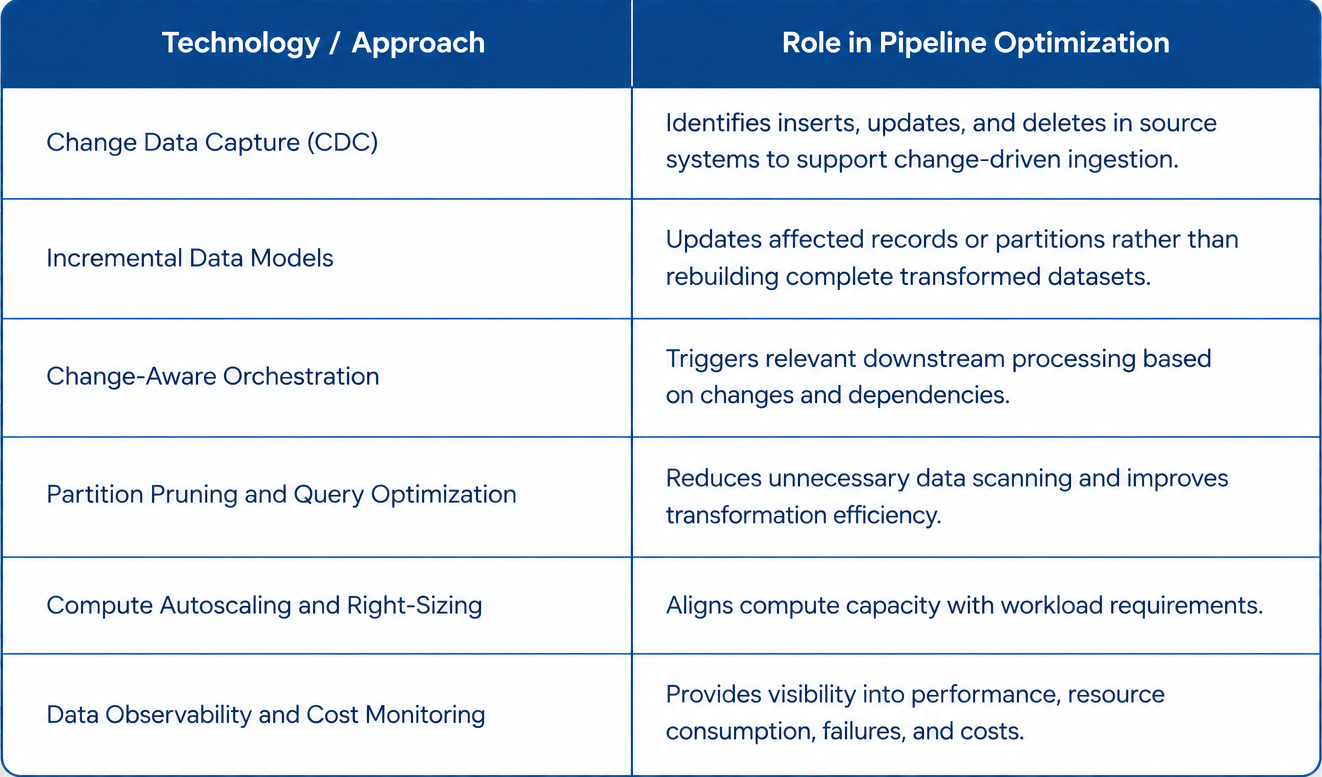
Streams, Tasks, Dynamic Tables, query profiling, and warehouse configuration controls can support incremental processing, automated transformations, and workload optimization. Streams and Tasks can support change-driven processing, while query profiling helps identify expensive operations.
Structured Streaming, Delta Lake, and managed declarative pipelines support incremental and streaming processing. Change data feed and optimized storage layouts can help avoid unnecessary re computation.
Data Factory, Lakehouse, Warehouse, and related services can be combined with incremental ingestion, partition-aware processing, pipeline orchestration, and capacity monitoring.
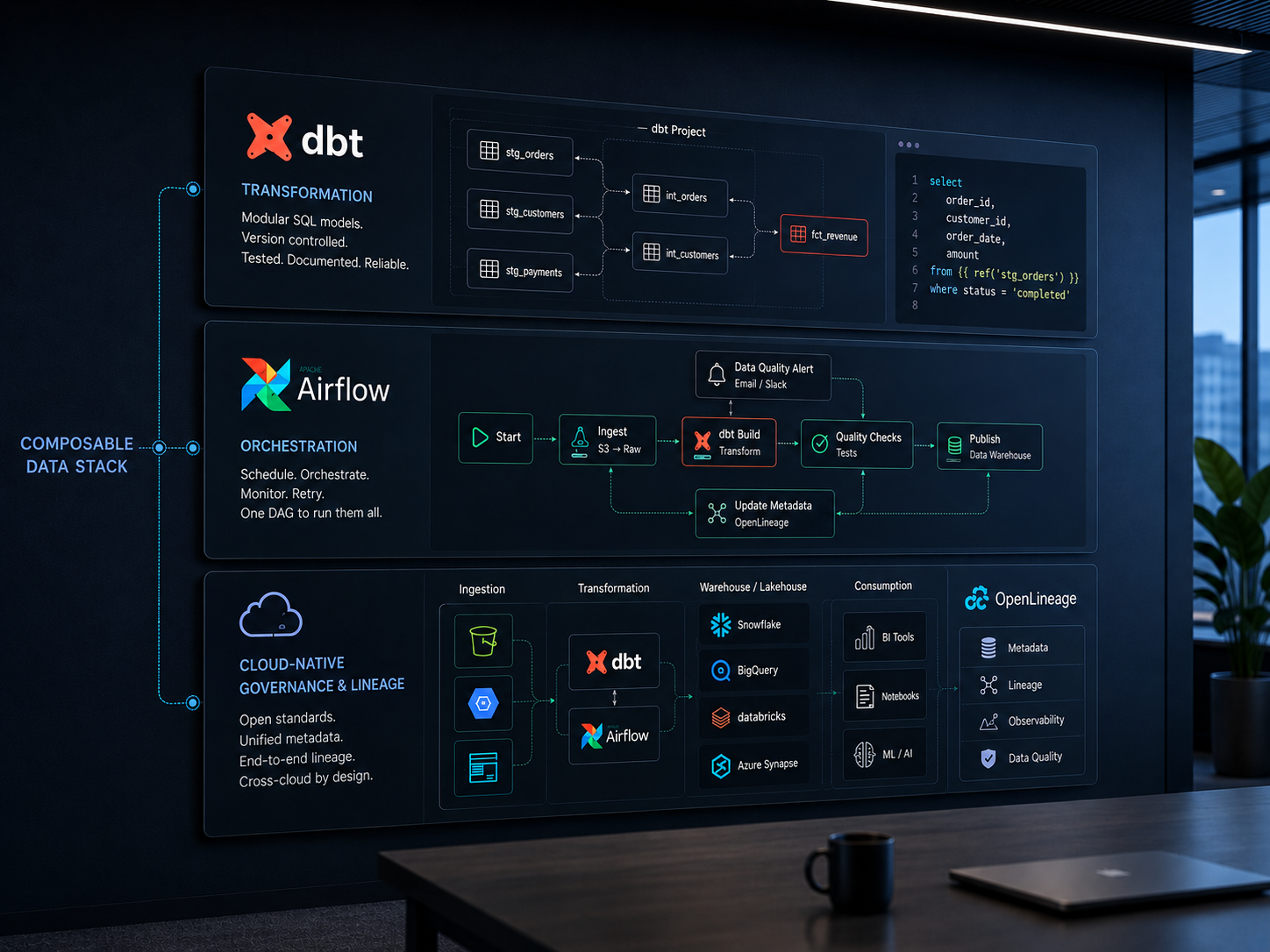
Incremental materializations, reusable transformation logic, and dependency-based model execution can improve efficiency across supported platforms. But an incremental model alone does not guarantee an optimized pipeline.
The key is not selecting a platform with the most optimization features. It is designing workloads that use those capabilities appropriately.
Consider a retail enterprise consolidating transactional data from its e-commerce platform, ERP system, and point-of-sale applications. Its analytics environment supports sales reporting, inventory planning, customer analysis, and financial performance monitoring. It processes approximately 50 million historical transaction records, with around 100,000 inserted or modified in a typical daily cycle.
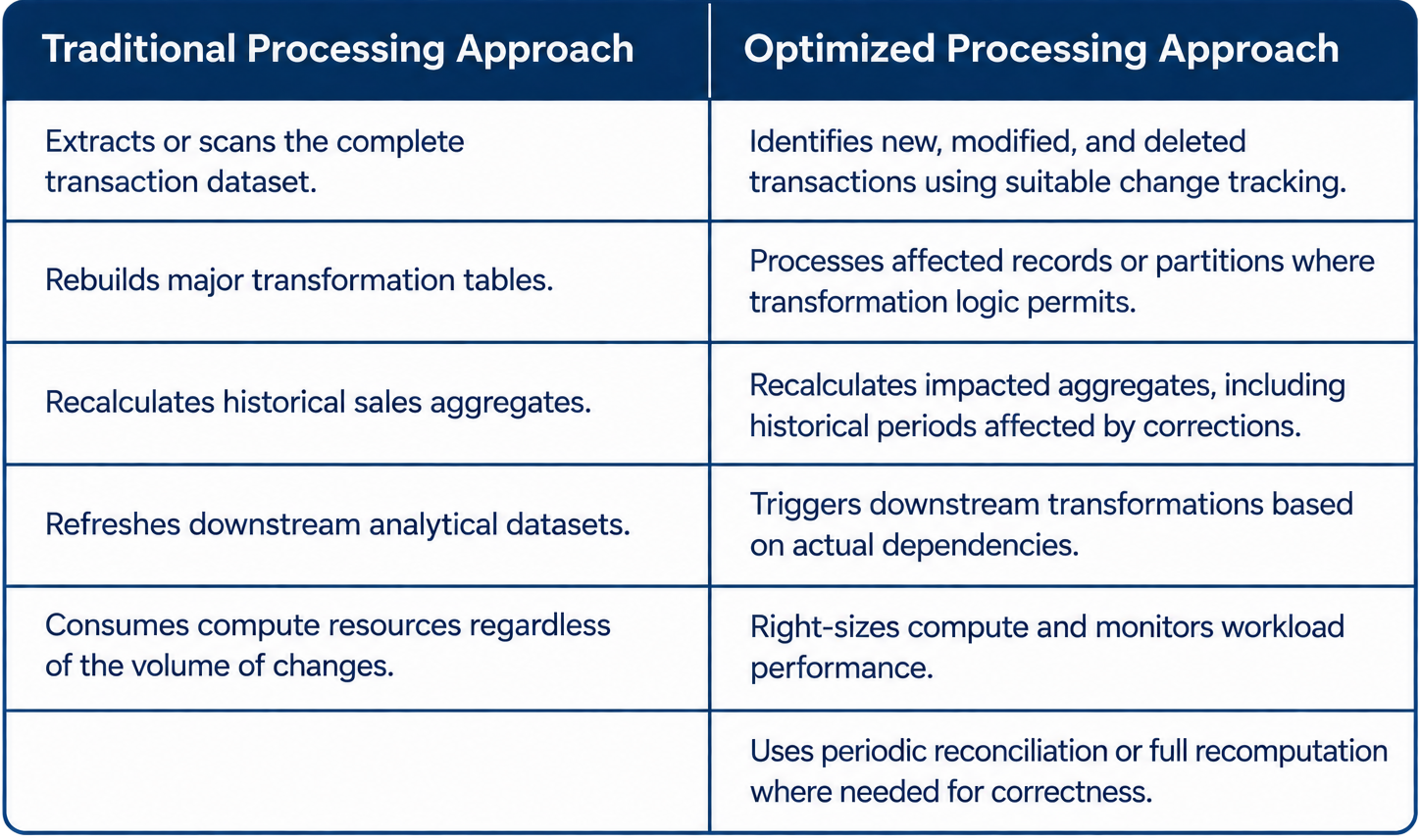
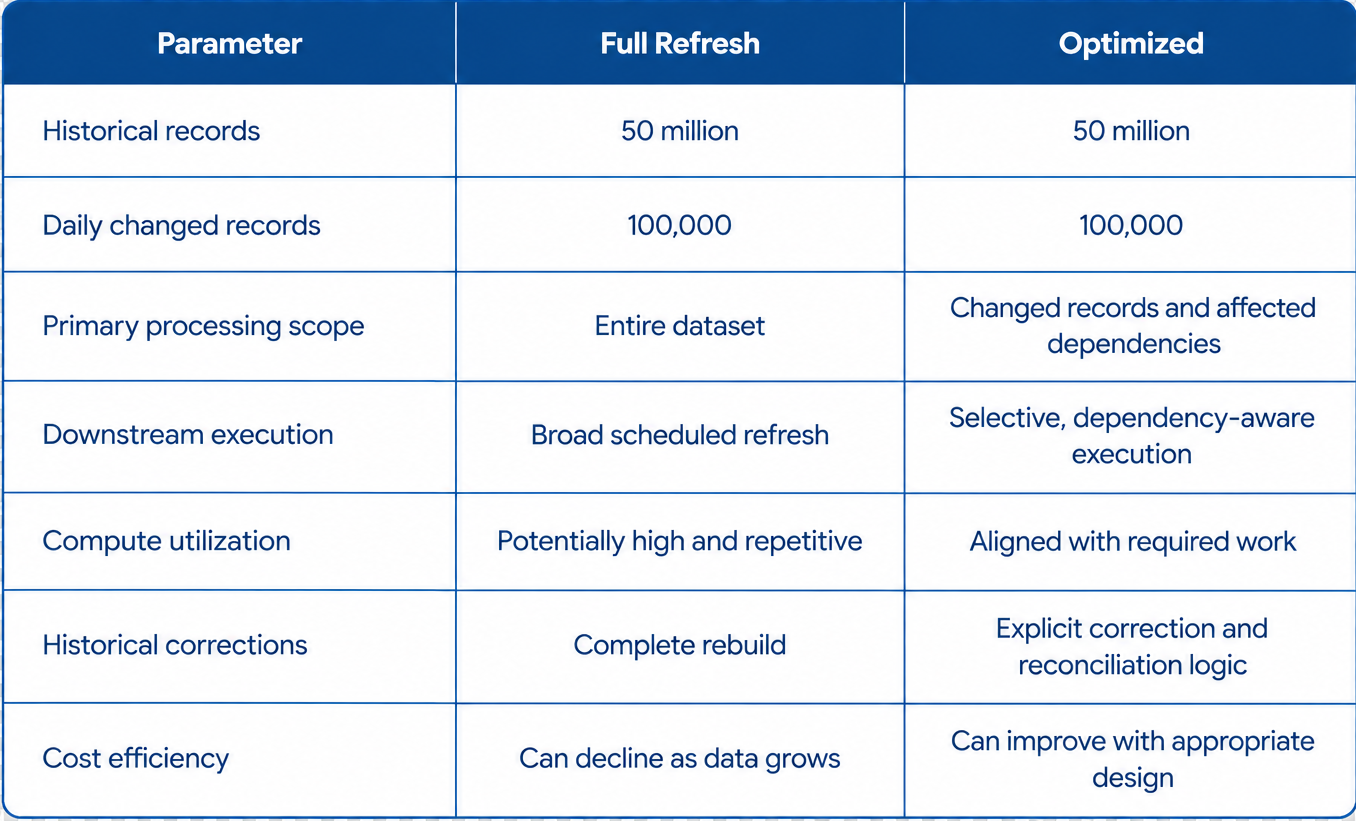
Organizations do not necessarily need to redesign their entire data architecture. A structured assessment can reveal optimization opportunities with measurable business impact.
Identify the pipelines and transformations consuming the most resources, and establish a baseline.
Determine whether each workload requires complete refresh or can safely adopt incremental processing. Evaluate the volume and frequency of changes, source-system capabilities, transformation complexity, historical corrections, and downstream dependencies. Some workloads remain more efficient or reliable with periodic full recomputation.
A faster pipeline is not better if it produces inconsistent results. Incremental processing must handle updates, deletes, duplicate events, late-arriving data, and historical corrections. When an existing order value changes from $1,000 to $1,200, an incremental revenue model must account for the original contribution rather than simply adding the revised value. Reliable implementations require idempotent processing, reconciliation, recovery mechanisms, and representative historical tests.
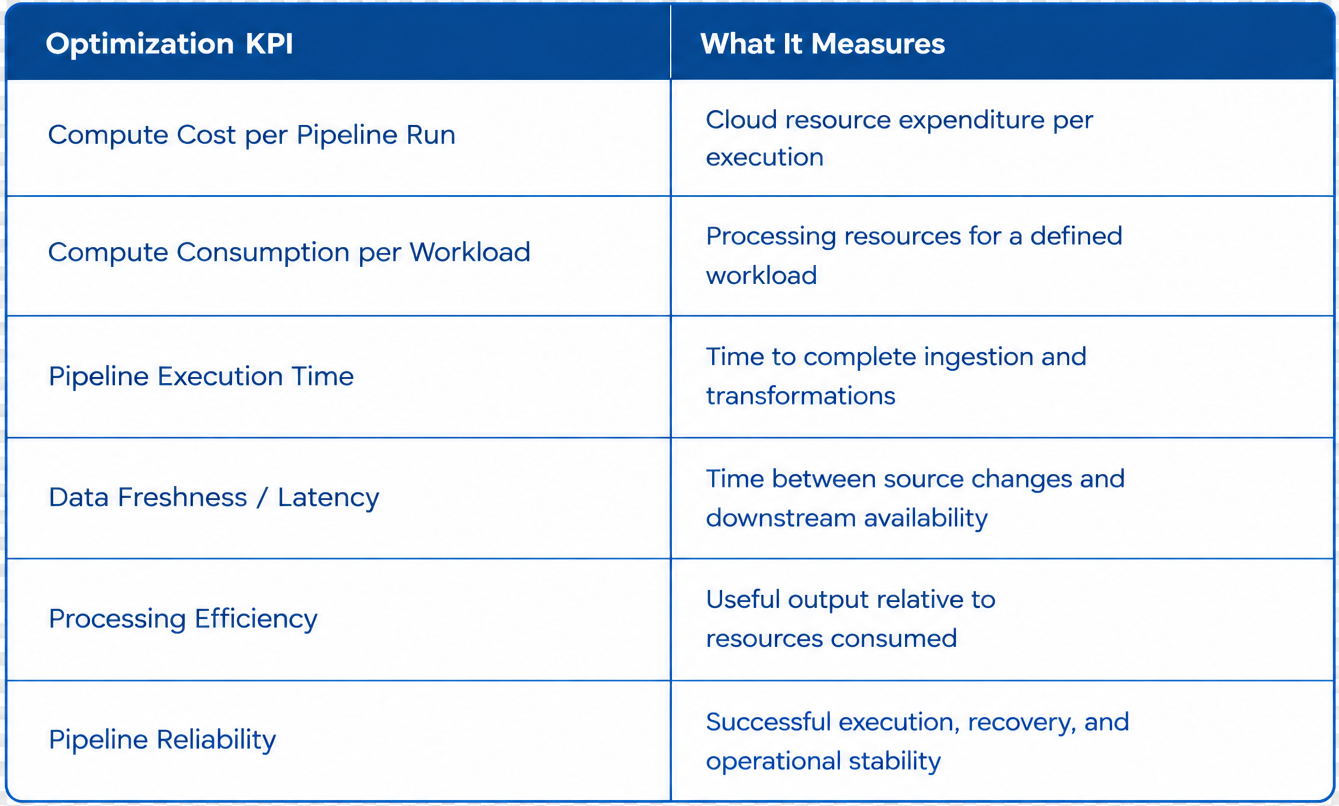
As enterprises invest in cloud modernization, analytics, and AI, data platform efficiency is an increasingly important component of technology cost management. Optimization now encompasses more than execution time.
Reducing avoidable cloud consumption while maintaining required service levels.
Completing pipelines within operational and analytical time windows.
Supporting growing data volumes without proportionate cost increases.
Maintaining accurate, consistent, and recoverable workflows.
Delivering updated information when users and applications need it.
Reducing unnecessary transformations may release compute capacity for time-sensitive analytics without additional infrastructure. Improving orchestration can reduce processing delays and operational overhead. The goal is a technically capable and economically sustainable platform.
Pipeline optimization should not be a one-time cost-reduction exercise. As organizations introduce data sources, expand analytics, and adopt AI applications, processing requirements evolve.
A sustainable approach defines freshness requirements, selects suitable processing patterns, designs reliable incremental transformations, monitors costs, and continuously validates performance.
Not every workload should be incremental. Full refreshes, periodic recomputation, and larger-scale processing remain necessary for certain transformations, reconciliation, and recovery. Select the right strategy for each workload rather than applying one pattern universally.
At DecisionTree Analytics, we help enterprises modernize and optimize their data ecosystems across cloud data platforms, data engineering, and advanced analytics. Our technology-agnostic approach aligns architecture and engineering with business requirements, performance expectations, and operational efficiency.
Evaluate architectures, pipeline performance, compute utilization, and optimization opportunities.
Design scalable ingestion, transformation, and orchestration frameworks using suitable batch, incremental, and change-driven patterns.
Modernize environments across Snowflake, Databricks, Microsoft Azure, and AWS.
Implement monitoring, validation, reconciliation, and operational controls.
Improve efficiency through transformation optimization, compute right-sizing, and processing architecture improvements.
Our focus is not simply making pipelines run faster. It is helping organizations build reliable, scalable, cost-conscious data foundations that support evolving analytical and business needs.
A data pipeline that completes successfully is meeting only one dimension of performance. As cloud environments grow, organizations must understand compute efficiency, unnecessary processing, and long-term economic sustainability.
Incremental processing, change-aware orchestration, query optimization, and workload monitoring provide practical ways to address these challenges. But meaningful optimization begins with understanding the workload, not simply adopting another technology.
The future of data engineering is not about processing more data with more compute. It is about delivering greater business value from every unit of compute consumed.
Is your data platform optimized for performance, scalability, and cost efficiency? Connect with DecisionTree Analytics to explore opportunities to improve your data engineering environment